

< Nanomechanical Testing in Materials Research and Development X
Preliminary Program
Preliminary Poster List
Keynote Speaker
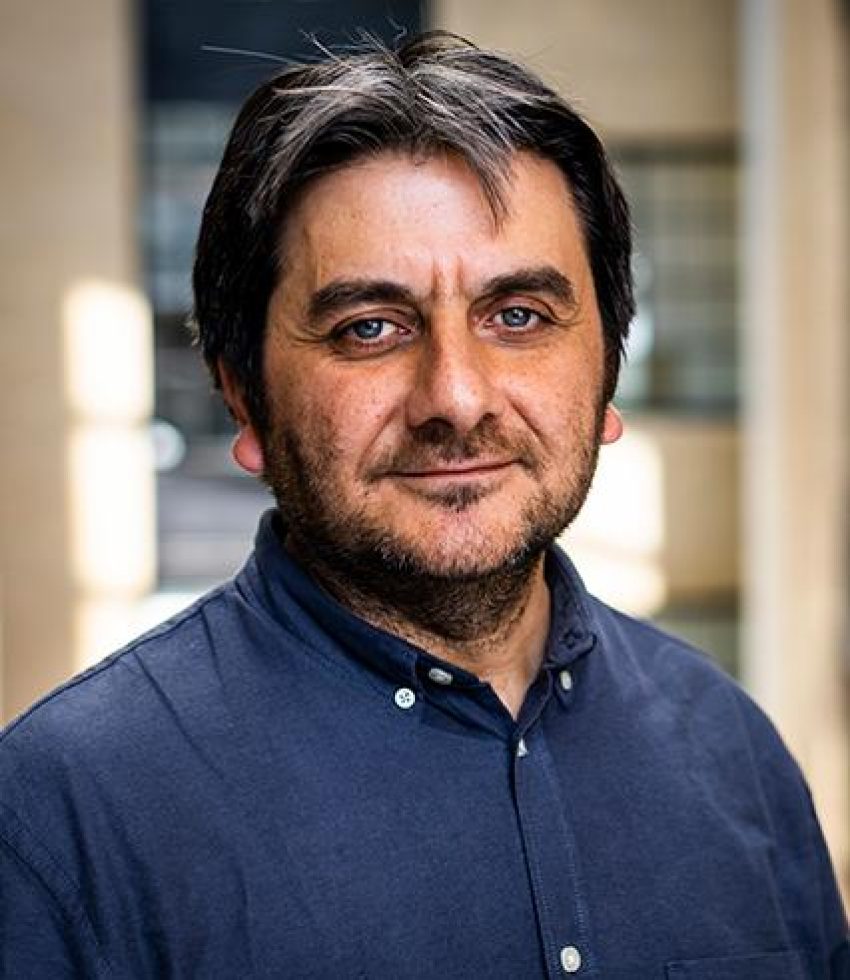
Cem Tasan
MIT, USA
POSCO Associate Professor of Metallurgy; Director, Materials Research Laboratory
Department of Materials Science & Engineering
Massachusetts Institute of Technology
Biography
Professor Tasan is the POSCO Associate Professor of Metallurgy. He earned his BS and MS in the Department of Metallurgical and Materials Engineering at METU, Middle East Technical University, in Ankara, Turkey. He carried out his PhD work in the Mechanical Engineering Department at Eindhoven University of Technology in the Netherlands. He then moved to Max-Planck-Institut für Eisenforschung in Germany, where he was appointed first as a postdoc, and then as a group leader. He joined DMSE as a faculty member in 2016 and was granted tenure in 2022.
Highlighted Speakers
Nagamani Jaya Balila (IIT Bombay, India)
Sandrine Brochard (Institut P', Université de Poitiers-CNRS-ENSMA, France)
Sebastian Bruns (TU Darmstadt, Germany))
Megan Cordill (Erich-Schmid Institute, Leoben, Austria)
Chris Eberl (Fraunhofer, Freiburg, Germany)
Christoph Gammer (Erich-Schmid Institute, Leoben, Austria)
Christian Greiner (KIT; Germany
Alexander Hartmaier (ICAMS-RUB, Bochum, Germany)
Szilvia Kalacska (CNRS, St Etienne, France)
Christoph Kirchlechner (KIT, Germany)
Matthew Pharr (Texas A&M, USA)
Eugen Rabkin (Technion, Haifa, Israel)
Edoardo Rossi (University Roma Tre, Italy)
Timothy Rupert (John-Hopkins University, USA)
Emilio Scalise (University Milano-Biccoca, Italy)
Ruth Schwaiger (Jülich, Germany)
Jakob Schwiedrizk (EMPA, Switzerland)
Session Descriptions
Novel Nanoindentation and nanomechanical testing methods
Using novel nanoindentation hardware and data analysis techniques to explore properties of complex material with improved sensitivity and resolution.
Multiscale deformation and failure mechanisms (from atomic to meso-scale)
Bridging observations of mechanical deformation and failure across multiple length scales.
In-situ and Operando nanomechanics
In-situ deformation studies in SEM, TEM, AFM, optical microscopy, X-Ray, neutron and electron characterization (both imaging and diffraction).
Correlative mechanical microscopy
Correlative mechanical microscopy using different probes (photon, phonon, electron, ion, or combinations), to understand deformation processes in advanced structural materials
Nanomechanics in extreme conditions
Nano- and micromechanical tests in extreme environments (e.g., high temperature, cryogenic, etc.) or non-conventional loading conditions (e.g., high strain rate, nano-tribology), including testing under service conditions (operando)
Complex strain measurement methods and advanced data analysis
The post processing of the data, including full field measurements by image and volume correlation, as well as time-resolved experiments to unravel dynamic processes far from equilibrium
Integrated modelling and characterization
Integration with modeling for mechanistic discovery, experimental interpretation, parameter calibration, or model validation
Artificial Intelligence for nanomechanics
Application of artificial intelligence, data-driven methods and materials informatics in materials science in the context of materials’ deformation at the nano- and microscale.
Application of nanomechanics to industrially relevant materials and devices
Application of novel micro-nanoscale mechanical testing methods to emerging and/or industrially relevant materials (energy materials, advanced composites and polymers, advanced coatings, biomedical and bio-mimetic materials, 3D printed materials)
Abstract Submission
Abstract Submissions are closed. Abstracts for all presentations will be made available to conference participants prior to the start of the conference.
Click here to see the status and confirm-or-withdraw your abstract.
Oral Presenter Guidelines
When it comes to PowerPoint, “less is more” is a rule that helps your presentation shine… No more than 6 words per line and no more than 6 lines per slide. Keep your slides clean and use 18-30 pt. font to list key points. Click here for more tips and tricks for your oral presentation.
Poster Guidelines
The best posters display a succinct statement of major conclusions at the beginning, followed by supporting text in later segments and a brief summary at the end. Click here for instructions and more information.
Poster Size: 1.5 meters (L) x 1.0 meter (W) - Portrait style.